
 FREE PICKUP
 FREE INSPECTION
 FREE DIAGNOSTICS
 REPAIR & FIX
 DELIVER BACK
 4.9 Google Review
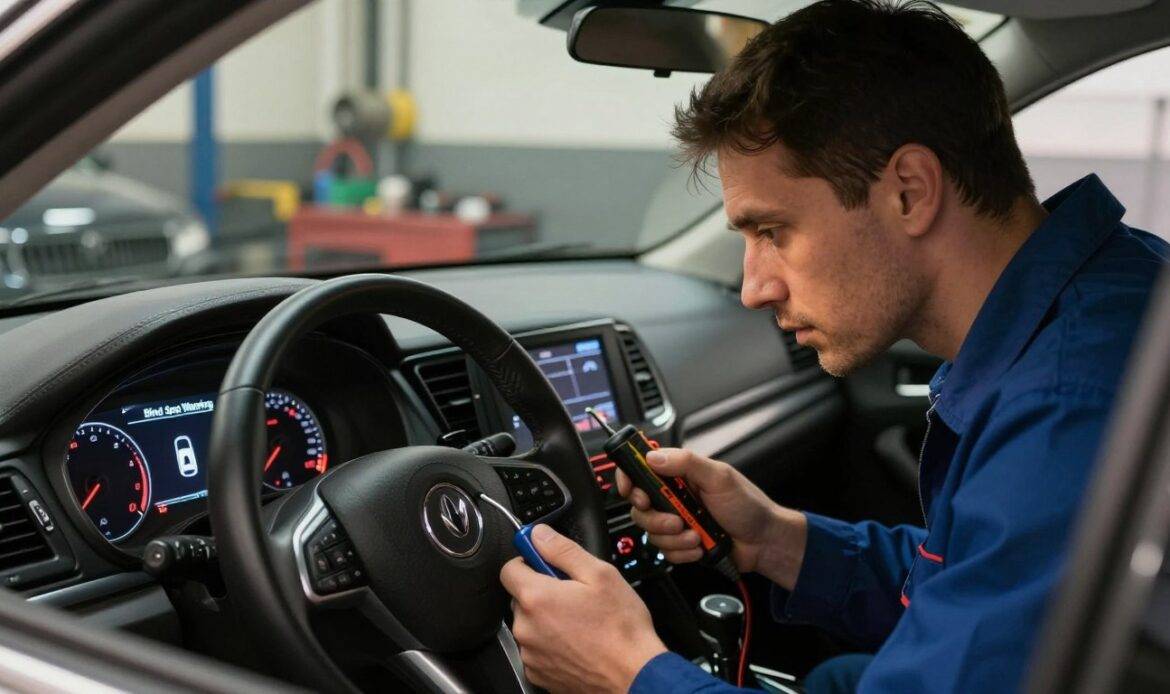
Ever had that moment on Sheikh Zayed Road when you check your mirror and feel unsure? You trust your car to fill in the gaps. But when “Check Blind Spot Warning” lights up, it feels like a safety net is gone.
This BCW system repair guide is for that moment. Your Blind Spot Collision Warning system watches the lanes beside you. It sends alerts through mirror icons, dashboard messages, or a chime, depending on the brand. You’ll see it across Nissan, Hyundai, Kia, Toyota, Honda, BMW, Mercedes-Benz, Ford, and GM models.
In this guide, you’ll learn how to fix check blind spot collision warning bcw system issues with a clear path. You’ll start with simple checks that can help you fix check blind spot warning fast. Then, you’ll move into scanning, wiring inspection, module testing, and radar calibration if needed.
Fast action matters in the blind spot collision warning UAE driving environment. High speeds, tight merges, and long commutes mean you may lean on that alert more than you think. If the system drops out, you can lose blind spot warnings and, on some vehicles, lane-change assist features tied to the same network.
Some causes are quick and common, even in Dubai conditions. Heat, sand, heavy dust, frequent car washes, and minor bumper taps in parking lots can trigger intermittent faults. If you want hands-on help, Exclusive Auto Repairing Dubai offers 24-hour assistance for diagnostics, electrical repair, sensor replacement, and calibration coordination.
Key Takeaways
- Your BCW system helps detect vehicles in adjacent lanes and warns you through lights, messages, or sound.
- The “Check Blind Spot Warning” message can signal anything from dirt on a sensor to a deeper electrical or module fault.
- This BCW system repair guide moves from easy checks to advanced diagnostics and calibration steps.
- UAE heat, sand, and frequent washes can cause blind spot collision warning UAE alerts to appear on and off.
- Weak battery voltage and minor bumper impacts are common triggers that many drivers miss.
- For blind spot monitoring system Dubai repairs, professional scanning and calibration may be required after body work.
Understanding BCW and Blind Spot Collision Warning Alerts
Blind Spot Collision Warning (BCW) helps you see vehicles beside you when changing lanes on UAE highways. If the system has issues, you might notice changes in warning timing or sensitivity. Knowing what your car is trying to tell you makes fixing problems easier and less stressful.

What the “Check Blind Spot Warning” message means for your vehicle
The BCW warning message is usually simple. It means the feature has found a problem and might be limited or disabled. Your car will keep driving normally, but you might not get driver-assist warnings until the problem is fixed.
You might see this message after a low-voltage event, a blocked sensor area, a communication hiccup, or a calibration mismatch. If the blind spot warning light on mirror stops lighting up, that’s a sign the system is unsure.
How blind spot monitoring sensors work in modern cars
Most modern vehicles use short-range radar modules behind the rear bumper corners. Some trims also add cameras. But radar does most of the work for tracking vehicles in adjacent lanes.
The system watches for vehicles entering your blind spot zone and then triggers a warning in the mirror or cluster. Keeping the bumper clean, having steady battery and alternator power, solid wiring, and correct alignment all help fix blind spot detection errors.
Common symptoms of BCW system malfunctions and blind spot detection errors
Problems often show up as warnings at startup or mid-drive, even on familiar roads. You might get alerts when no vehicle is there, or the warnings might only work on one side.
- The blind spot warning light on mirror does not illuminate on one side
- BCW turns off in settings or returns after you restart the car
- Indicators flash too often in slow traffic or near barriers
- False alerts after bumper repainting, tow hitch installs, or minor rear impacts
- Issues shortly after a battery replacement or jump start
Why alerts may appear intermittently in UAE driving conditions
An intermittent blind spot warning UAE drivers report is often tied to the environment. Dust, sand, and road film can weaken radar performance, which is common after long desert drives or construction detours.
Heat can stress connectors and wiring, while coastal humidity can slowly encourage corrosion. If water gets into a compromised seal during pressure washing, you may see temporary faults that come and go. This makes troubleshooting blind spot collision warning alerts harder and delays resolving blind spot detection errors.
how to fix check blind spot collision warning bcw system
When the alert shows up in UAE heat, dust, or stop-and-go traffic, you want a steady plan. This walkthrough focuses on how to fix check blind spot collision warning bcw system. We’ll start with quick checks and then simple inspections to restore normal operation.
If the warning comes and goes, treat it as a real driver-assist fault until it proves stable. You can reduce risk while you work through the most common causes.

Quick safety checks you can do before troubleshooting
- Park on level ground, shift into Park, and set the parking brake before you inspect anything.
- Confirm Blind Spot Monitoring or BCW is switched on in your vehicle settings, as some models let you disable it.
- Look for rear bumper corner damage, loose trim, missing clips, or signs of a minor impact near the sensor areas.
- Avoid testing the system in heavy traffic until alerts behave normally and consistently.
Cleaning radar/sensor areas to resolve blind spot warning sensor issues
In the UAE, dust buildup is a top reason for random alerts. A careful exterior clean is often the fastest step for resolving blind spot warning sensor issues.
Clean the rear bumper corners with a non-abrasive cleaner, then remove stuck-on sand, mud, or sticker residue. If your bumper has thick repaint, metallic wrap, or body filler, the radar signal can weaken and trigger warnings even after cleaning.
Battery voltage and charging system checks that affect BCW operation
Many driver-assist systems are sensitive to power dips, which can happen during startup. In simple terms, battery voltage affects blind spot monitoring because low voltage can cause modules to boot late or log faults.
Watch for slow cranking, frequent jump-starts, or a battery that is near end of life in hot weather. If you can, have the battery and alternator tested so you can rule out charging issues before deeper diagnosis.
Fuse, wiring, and connector inspection for fixing blind spot monitoring system problems
If the alert persists, a basic visual check can uncover common causes of fixing blind spot monitoring system problems. Heat, vibration, and minor water exposure can turn a small connector issue into an intermittent warning.
- Check the relevant fuses for the BCW/ADAS modules based on your vehicle’s fuse map.
- Inspect visible harness routing near the rear bumper for pinches, abrasion, or rubbing against brackets.
- Look for loose connectors, bent pins, or moisture; marginal connections often fail under heat and vibration.
Avoid aggressive probing or forcing terminals, as damaged pins can create new faults that are harder to trace.
Resetting procedures vs. calibration needs after repairs or bumper work
After cleaning or correcting power supply issues, a BCW reset procedure may clear a temporary fault and restore normal alerts. On many vehicles, clearing stored codes and confirming system status requires a proper scan tool.
Calibration is different. If you had bumper removal, collision repair, bracket changes, sensor replacement, or rear-end alignment work, the system may need calibration with targets and exact measurements to confirm sensor aim and angle.
BCW System Troubleshooting Guide for Sensor, Wiring, and Module Faults
When your warning light flickers, you need a reliable guide. Most issues are in the sensor, wiring, or control module. A step-by-step check helps avoid replacing unnecessary parts.
Troubleshooting blind spot collision warning alerts using diagnostic scanning
For blind spot alerts, a diagnostic scan is key. Your car might store codes in the ADAS, BCM, or parking assist module. This depends on your car’s brand and model.
A scan can reveal sensor trouble, low voltage, or internal failures. It also shows network errors or aim issues. If other features like rear cross-traffic alert or parking sensors are affected, it’s due to shared wiring.
Resolving blind spot detection errors caused by misalignment or impact damage
Blind spot sensors are behind the rear bumper. Even small impacts can misalign them. This can lead to false targets or missed vehicles.
Repairing the bumper or changing it can also affect the sensors. If you’ve recently fixed glass or trim after a small hit, check related areas. This includes windscreen repair in Dubai for damage beyond the bumper.
Troubleshooting blind spot monitoring sensor problems from water intrusion or corrosion
Moisture at the connector often causes sensor issues. In the UAE, washing or humidity can let water in. This can lead to green or white corrosion.
This corrosion increases resistance and causes random dropouts. Look for cracked housings, loose pins, and damaged seals. Also, check harness wear near clips and sharp edges.
Fixing collision warning system issues related to CAN communication faults
Collision warning system issues might be network problems, not sensor ones. BCW modules use CAN for communication. A network fault can disable multiple features and seem intermittent.
Check for shared network codes and verify clean power and ground at the module. If warnings increase with bumps, it might be a wiring break or a connector issue.
When a sensor replacement or radar calibration is required
Replace sensors when scan data shows failure or damage. Calibration is needed after sensor swaps or changes. It’s also required for codes related to aim or calibration status.
In Dubai, radar calibration is often needed for stable detection. After fixing, clear codes and test in safe conditions. Confirm the alerts are consistent without faults.
Steps to Repair BCW System Malfunctions and Prevent Repeat Failures
When your dash shows a blind spot alert, you need a clear plan, not guesses. These steps help you find the cause, see what changed, and avoid replacing parts that work. This keeps your ADAS system safe in UAE’s heat, dust, and traffic.
First, check if the alert is always on, only after startup, in rain, or on one side.
Look for scuffs, loose mounts, or harness rub points on the rear bumper corners near the sensor brackets.
Clean the radar zones and remove any film, thick wax, or wrap that can block the signal; then re-test.
Make sure the battery is healthy and charging well, as low voltage can cause faults and false warnings.
Run a diagnostic scan, save codes and freeze-frame data, and follow the manufacturer test plan.
Do electrical checks: power, ground, and signal continuity, plus connector pin-fit; repair with sealed splices and correct terminals.
Correct bracket or sensor alignment issues and replace bent mounts so the radar angle stays within spec.
Replace a sensor, radar, or module only after root cause is proven, which is key to long-term BCW reliability.
Calibrate when required after bumper or sensor work, then road-test until the system reports readiness.
To prevent blind spot sensor failure, keep the rear corners clean after desert runs. Avoid aggressive pressure washing at close range. If you use wraps or coatings, make sure they are radar-compatible to avoid triggering problems.
Good basics protect your driver-assist features. A steady routine like essential car maintenance tips for Dubai supports ADAS maintenance UAE owners rely on. Voltage, fluids, and overall vehicle condition affect sensor accuracy.
Stop DIY and book a professional scan if warnings return after cleaning, codes repeat, or you see moisture inside a lamp or sensor area.
Get workshop proof of post-repair calibration and a post-repair scan report after any bumper repair or minor collision.
Ask for documentation of connector repairs and sealing steps to reduce corrosion and intermittent CAN or network faults.
If the warning started right after bodywork, treat calibration as non-negotiable. That single step often decides whether the fix lasts, or whether the same alert comes back during your next sandstorm commute.
Conclusion
Seeing “Check Blind Spot Warning” is like getting a safety alert. It’s not a mystery to solve. Start by checking your settings, cleaning the sensors, and ensuring the battery is okay. These steps often fix the issue without needing expensive repairs.
In the UAE, common problems like road dust and low battery can cause issues. Also, a small bump or parking mishap might misalign the system. In such cases, you might need professional BCW system repair UAE.
If the warning comes back, it’s time for a detailed scan. ADAS diagnostics Dubai and car scanning Dubai 24 hours can find the problem. This way, you can fix it right and avoid future problems.
For a reliable fix, reach out to Exclusive Auto Repairing Dubai. Call +971 56 326 8124 or email [email protected]. They offer services like AC repair, oil change, transmission repair, and more.
FAQ
Q: What does “Check Blind Spot Warning” mean on your dashboard?
A: It means your car’s Blind Spot Collision Warning system has a problem. This might limit its function. Your car will keep running, but you might miss out on safety alerts until the issue is fixed.
Q: How does the BCW / blind spot monitoring system work in modern vehicles?
A: Modern systems use radar sensors at the rear bumper corners. Some cars use cameras or a mix of both. They track vehicles in your blind spots and alert you when it’s time to change lanes.
Q: What are the most common symptoms of BCW system malfunctions?
A: You might see warning lights or get false alerts. The system might not work at all or only on one side. You could also get repeated alerts that stop and start.
Q: Why do blind spot collision warning alerts appear intermittently in UAE conditions?
A: Sand, dust, and dirt can block radar signals. Extreme heat can also damage electrical connections. Washing your car too much can cause moisture to get into the sensors, leading to faults.
Q: How to fix check blind spot collision warning BCW system with quick checks before deeper troubleshooting?
A: First, park safely and check if BCW/BSM is on. Look for damage on the rear bumper corners. Avoid heavy traffic until the system works consistently.
Q: Can cleaning the rear bumper corners resolve blind spot warning sensor issues?
A: Yes. Cleaning the sensor areas can quickly fix issues, like after a sandstorm. Use a gentle cleaner to remove dirt and wax that can affect radar signals.
Q: Can low battery voltage cause BCW warning messages?
A: Yes. A weak battery can trigger faults, including BCW. Slow cranking or recent jump-starts are signs of a power problem.
Q: What should you check for fuses, wiring, or connectors when troubleshooting blind spot monitoring sensor problems?
A: Check the fuses linked to ADAS/BCW. Look for pinched or damaged wiring near the rear bumper. Also, check for loose connectors or moisture, which can cause intermittent alerts.
Q: What’s the difference between a reset and calibration for resolving blind spot detection errors?
A: A reset clears temporary faults. Calibration is needed after bumper work or sensor changes. It ensures the system works right again.
Q: How does diagnostic scanning help in a BCW system troubleshooting guide?
A: Scanning reads trouble codes and finds the problem. It helps avoid guessing and is key to fixing BCW issues correctly.
Q: Can minor impacts or bumper repairs cause blind spot detection errors?
A: Yes. Even small bumps can misalign radar sensors. This is a common reason for false alerts or shutdowns after bumper work.
Q: How do water intrusion and corrosion trigger blind spot monitoring failures?
A: Moisture can damage connector seals and cause corrosion. This increases resistance and leads to faults, often after washing or in humid areas.
Q: What are CAN communication faults, and how can they affect the BCW system?
A: CAN faults can make multiple systems fail. They can cause unpredictable warnings. Diagnostics are needed to find and fix these issues.
Q: When is radar sensor replacement or calibration required for fixing blind spot monitoring system problems?
A: Replace sensors if scans show damage or failure. Calibration is needed after bumper work or if codes indicate an issue.
Q: What are practical steps to repair BCW system malfunctions without replacing parts unnecessarily?
A: Start by confirming the fault and inspecting the bumper and wiring. Clean sensor zones and check the battery. Only replace parts after verifying all else is working right.